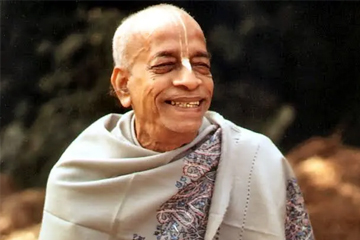
Srila Prabhupada’s arrival in the USA 3rd Oct 2026
Srila Prabhupada arrived in Boston on September 17, 1965.


Srila Prabhupada arrived in Boston on September 17, 1965.
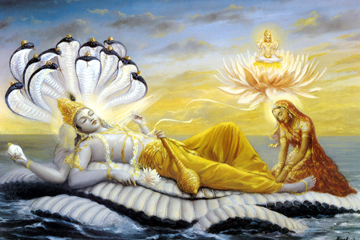
The delightful exultations of Indira Ekadasi are described in the Brahma-vaivarta Purana in the conversation between Sri Krsna and Maharaja Yudhisthira.
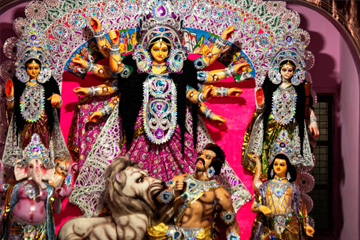
The occasion marks the occassion of Lord Rama and brother Lakshman approaching Mother Durga to ask her for her blessings in His planned attack
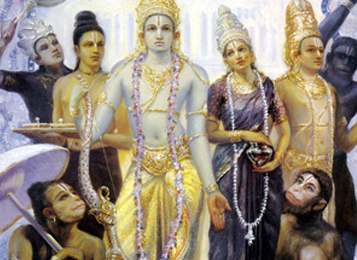
Lord Ramacandra’s victory over the demon Ravana. A large effigy of Ravana is ceremoniously burned.
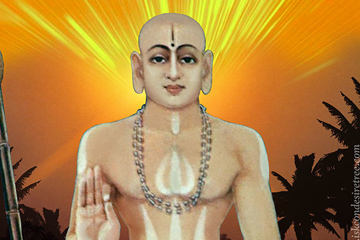
For twelve years Madhyageha Bhatta would regularly travel the eight [...]
Yudhishthira maharaj said, Oh Madhusudana, what is the name of the Ekadasii that comes during the light fortnight of the month of Ashvina (September - October)?
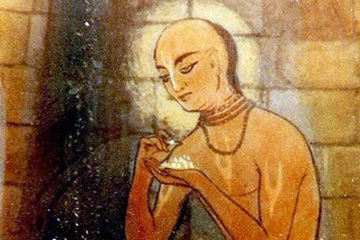
Raghunatha Dasa Gosvami , one of the six Goswamis, at a young age renounced his beautiful wife and opulent home to join Lord Caitanya and His sankirtana movement.
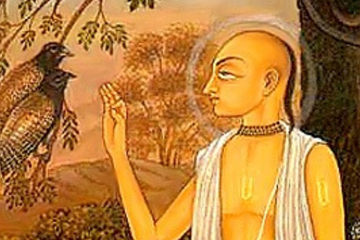
Raghunatha Bhatta Goswami, one of the six Goswamis of Vrndavana, was ordered by Lord Caitanya to go to Vrndavana and there constantly chant the Hare Krsna mantra.
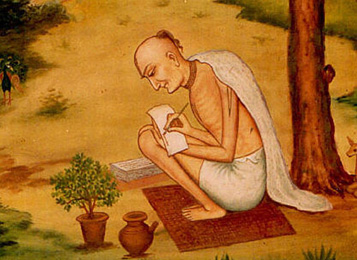
Appearing near Katva, Krishna Dasa Kaviraja left for Vrindavana after Lord Nityananda told him in a dream: are are krishnadasa, na karaha bhaya, Vrindavana yaha tanha, sarva larya haya, “0 my dear Krishnadasa, do not be afraid.
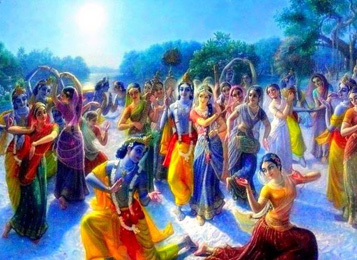
Lord Krsna’s autumn rasa dance with His girlfriends.
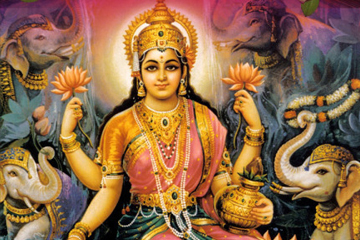
Laksmi Puja means worship of Laksmi Devi, the consort of Lord Visnu Goddess Laxmi is said to have emerged from the ocean of milk at Diwali. On that day, Laxmi puja was performed to honour Her and as such, every year at Diwali, She is worshipped and offered prayers (not observed by Gaudiya Vaisnavas).
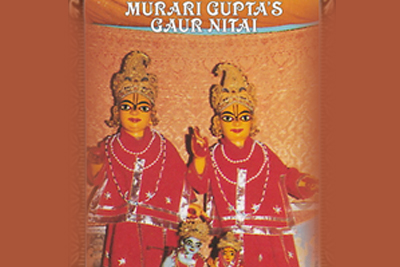
Murari Gupta was a lifelong associate of Lord Caitanya. He served Lord Caitanya in all of the Lord’s Navadvipa pastimes. By profession a doctor, Murari Gupta freed his patients not only from their physical ailments but also from the contamination of the material energy. Murari Gupta is considered an incarnation of Hanuman, the eternal servant of Lord Ramacandra.
Face the fact: (Source Global Huger Index 2017)
India is world’s second largest food producer yet it is home to world second biggest undernourished population. Source FAO 2015
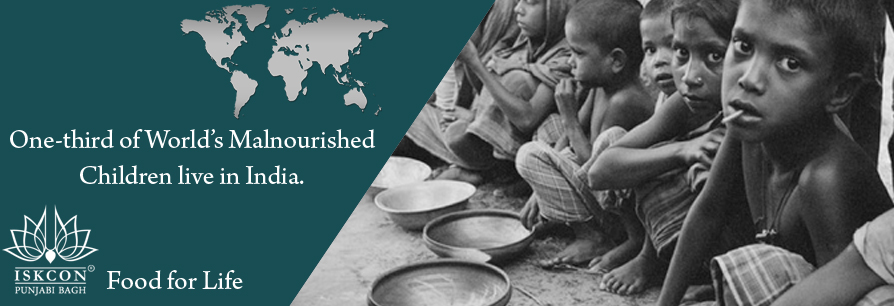
25 % of all hungry people worldwide live in India.
44% of Indian Children below the age of 5 are underweight.
Out of Worst hunger struck 119 countries India is at 100
What does a healthy human being need?
A balanced diet is one that helps a person maintain or improve health. It includes carbohydrates, fats, vitamins, proteins, roughage, water, and minerals. The amount of these nutrients varies with gender, age, occupation, climate and region. However, at ISKCON Punjabi Bagh, we understand that a complete meal is not just numbers and formulae. It is not just chopped-up vegetables and boiled grains. It is love that is the primary constituent of a healthy meal. The same love that a mother pours while she is at work in the kitchen, the same love that a father ploughs when he is toiling in the office, and the same love that siblings share when they fight.
How does ISKCON Punjabi Bagh satisfy this hunger?
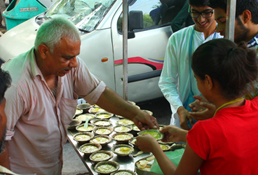
We, at ISKCON Punjabi Bagh, understand that apart from a person’s body craving for satisfaction of the stomach, the satisfaction of the person occupying that body is also of primary importance. We solve this eternal craving of the soul through World’s Largest vegetarian Non-Profit Food Relief program called the Hare Krishna Food-for-Life.
Each meal is not only delicious but is also prepared with full attention to personnel & infrastructure hygiene. The food so prepared is first offered to the almighty Supreme Personality of Godhead Sri Krishna, therefore, although its quantity remains unchanged but qualitatively it is transformed from meal to Prasadam. Such sanctified meals on the one hand fulfil the basic necessity of the body and on the other purify the consciousness of a person. The fortunate people who receive Prasadam meals develop all good human qualities such as kindness, truthfulness, cleanliness, and gain immense control over the agitations of mind. No other food item in the world can offer such spiritual benefits.
Is it really World’s Largest?
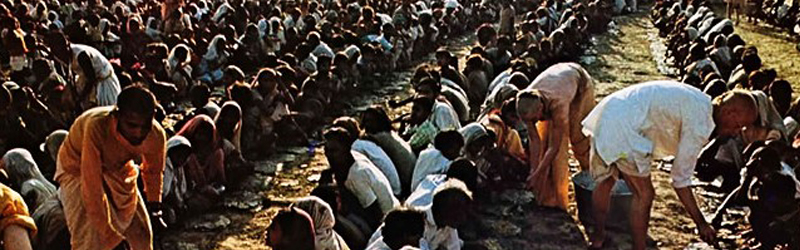
Yes, ISKCON volunteers provide up to 2,000,000 (Two Million) free meals every day. His Divine Grace A.C. Bhaktivedanta Swami Srila Prabhupada, the Founder-Acharya of ISKCON, instructed his disciples that no one should sleep hungry within a 10 mile radius of a Hare Krishna centre. Keeping true to His Divine Grace’s instructions, every centre based on the available resources tries to serve nutritious meals free of cost to every person who gives the temple an opportunity to serve. This includes visitors, pilgrims, and residents of neighbouring areas. In fact, monthly processions are also accompanied by free distribution of food. Apart from this, special relief packages are designed and dispatched to areas affected by natural calamities.
Can non-ISKCON people contribute?
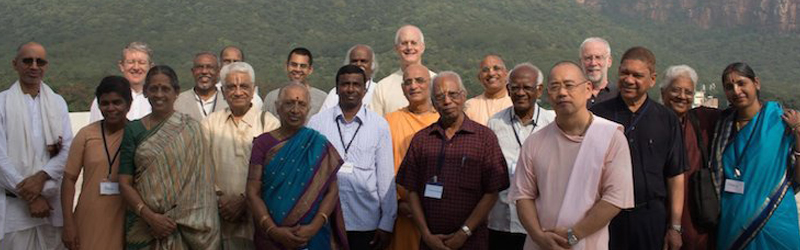
We are all children of the Supreme Personality of Godhead. This makes us God-brothers & God-sisters. Therefore, we encourage the more fortunate brothers and sisters to come forward and help the less fortunate ones. This can be achieved by sponsoring meals for the homeless, disadvantaged children, pilgrims and slum dwellers. We have created this web-page specifically for reaching out to people who have a big heart and a little time, energy and resources to spare. Your small contribution here can make 2 square meals possible for unprivileged brethren.
Where will my money go?
As every ISKCON temple is completely financially independent of the other, all money donated to ISKCON Punjabi Bagh temple is utilized locally within New Delhi. At times, we also travel the Indian sub-continent and distribute free Prasadam across the length and breadth of India.
No money from your donation is transferred outside the country without explicitly mentioning it. ISKCON centres worldwide manage their funds locally for the benefit of that region’s local population.
Because of this reason,currently, ISKCON Punjabi Bagh also does not accept any donations from foreign countries for the Food for Life program. In case, you are eager to contribute we suggest getting in touch with an ISKCON centre in your neighbouring area. The complete list of ISKCON centres world wide can be found here: http://centers.iskcondesiretree.com/ Hopefully, at a later time, when people all over the world have transcended the boundaries of nationality, colour, language, ethnicity and politics, we might be able to extend ourselves to help all children of God irrespective of geographical location.
I am still not sure if I want to contribute!
No Problem, we thank you for taking out time to read about the Hare Krishna Food for Life program. we suggest that you scroll through the rest of the website. It is highly probable that you will find another social cause that is worth investing your time and resources in such as education, organic farming, sustainable living and much more.
For Any Further Information Please Contact